
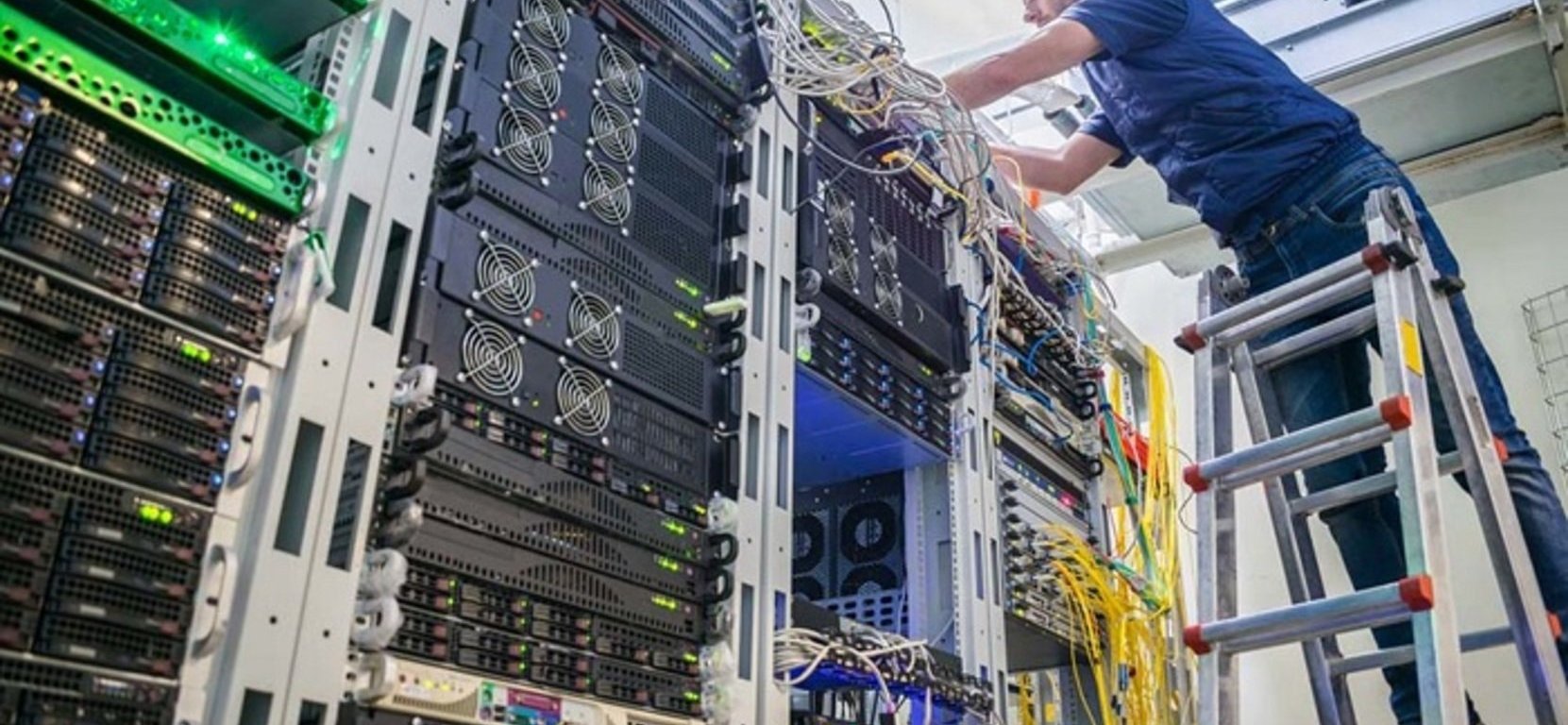
Quite frequently, server cabinets are installed in places next to people, such as offices, retail spots, receptions, etc. In such cases, noisy equipment may interfere with work and decrease productivity, impede normal working environment, or even influence sales and customer behavior. For such cases, a soundproof server rack cabinet is designed.
How does this Type of Server Furniture Differ from Classic Options?
Structurally, a soundproof model reminds of a classic cabinet, with the only difference is that special noise-reduction technologies are used to ensure better isolation. In those cases, when it is impossible to place the cabinet in another premises, this option turns to be perfect.
Server racks are excluded automatically since they do not provide enough protection from unauthorized access and can’t be soundproof since no walls are used for its construction.
How to make Server Cabinet Work Quietly?
There are three main directions that influence the level of noise. By arranging their smooth and optimal functioning, you’ll achieve noise reduction and enjoy the perfect result. These are:
- Soundproof techniques and materials;
- Fan systems;
- Cable management.
Let’s consider each of them in detail.
Soundproof Techniques
High-precious hardware, such as switches and serves, tend to be noisy when working. Manufacturers use one of the following techniques to reduce the level of noise and ensure device quiet operation:
- Noise Reduction Technique. The essence of this approach is that an obstructive object is used to block sound from entering the walls of the server cabinet.
- Noise Absorption Technique. This approach is based on the theory of acoustic waves absorption due to the use of specialized materials that absorb sound. Acoustic server enclosure is reinforced with such material to make the system work quitter. Moreover, these materials are considered to be inflammable, which contributes to higher security.
- Phase Cancellation Technique (or Active noise control). Here, physics laws are used to reduce the level of noise. Sound waves with opposite polarity to original ones are reproduced. As a result, waves neutralize each other.
Air-conditioning Systems
When speaking about a quiet home server rack, natural air circulation is used there to cool heating parts. Yet, this is hardly performed in enclosed server cabinets. Ever perforated doors can’t ensure sufficient heat exchange to avoid hardware overheating. Thus, forced systems of ventilation (fans) are installed inside the box to cool equipment. Fan systems function noisily as well. server cabinet manufacturers have developed two ways of cooling parts, namely active and passive ones.
Active Cooling
This air conditioning system implies mounting additional fans on the top or rear sides of the cabinet to force warm air to leave the box and achieve constant and sufficient air circulation. Several fans are usually installed on one product. An exact number of fans differs from one manufacturer to another. To calculate the required fan load and the number of devices, contact specialized agencies.
Passive Cooling
In this case, fans are mounted directly inside the silent server cabinet. Due to properly installed fans, two pressure zones are created inside the enclosure. The atmosphere inside the server furniture is divided into a low-pressure zone that is created right behind the front door and a high-pressure zone created near the rear doors. Due to such a distribution of climate zones, cold air is sucked into the cabinet where it is warmed by functioning equipment. And then it moves towards the rear doors and leaves the box. To ensure uninterruptable air circulation, doors are perforated.
The effectiveness of passive cooling is determined by the way devices are allocated and organized inside the cabinet, how their cooling systems are performed, etc. When dealing with passive cooling technology, it is required to provide front-to-back air circulation. All the hardware must be correctly installed. It is advisable to entrust this task to professional specialists who are well-versed in this work.
Cable Management
The way cables are routed directly affects the level of noise. Thus, when developing the layout of a future server unit, pay attention to such points as:
- The place of cabling (top, bottom, sides);
- The whole number of cables to be routed;
- Cabling inside the cabinet.
Modern technologies allow reducing the level of noise and ensure the comfortable and effective operation of both employees and hardware. Quiet server cabinet is ideal for public places and mounting in places in close proximity to working personnel.
 Geek Guy Tech