
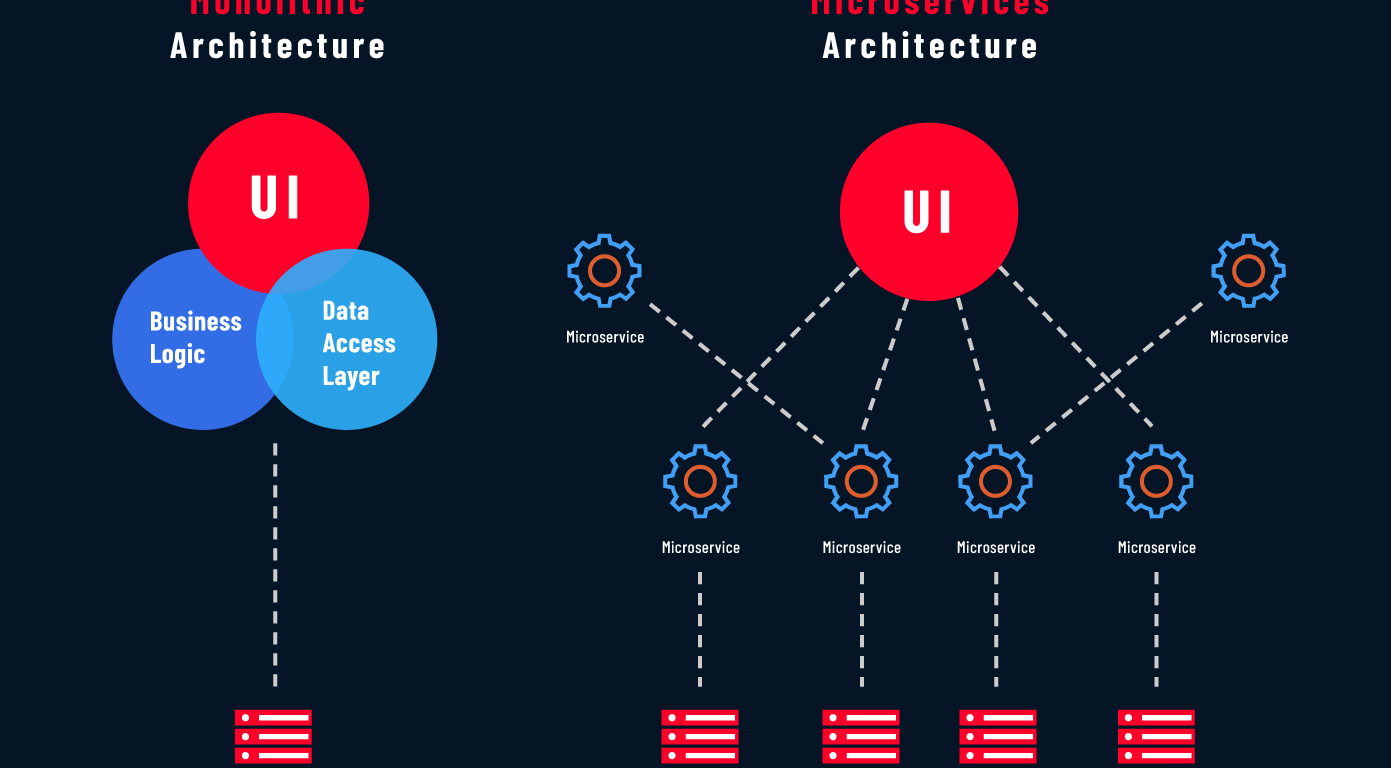
Comparing software architectures is crucial for effective software delivery. The debate of monolith vs. microservices is central to determining the best approach for your project. Each architecture has its strengths and weaknesses, making it essential to understand their differences.
Find below five key comparisons to help you decide.
Structure and complexity
Monolith: In a monolithic architecture, the entire application is built as a single unit. This simplicity makes development straightforward, especially for small projects. However, as the application grows, the codebase can become complex and harder to manage.
Microservices: Microservices architecture breaks down the application into smaller, independent services. Each service handles a specific function. This modularity simplifies updates and maintenance but adds complexity in managing multiple services.
Deployment and scalability
Monolith: Deployment is easier since it involves a single unit. However, scaling a monolith can be challenging. Scaling often means deploying the entire application, even if only one part needs more resources.
Microservices: Each service can be deployed independently, allowing for more flexible and targeted scaling. This can lead to more efficient use of resources and easier scaling of specific components.
Development speed and flexibility
Monolith: Initial development can be faster with a monolithic approach. However, as the application grows, adding new features and making changes can become slower and riskier due to interdependencies.
Microservices: Development can be more flexible and faster in the long run. Teams can work on different services simultaneously without affecting the entire application. This parallel development accelerates the release of new features.
Fault isolation
Monolith: A failure in one part of the monolithic application can affect the entire system. This can lead to more significant downtimes and make troubleshooting more challenging.
Microservices: Fault isolation is a key advantage. If one service fails, it does not necessarily bring down the entire application.
Technology stack
Monolith: Typically, a monolithic application uses a single technology stack. While this can simplify development initially, it limits flexibility and adaptability to new technologies.
Microservices: Different services can use different technology stacks that best suit their needs. This allows for more innovation and the ability to leverage the latest technologies for specific functions.
To conclude
Understanding these differences will help you make an informed decision that aligns with your project’s goals and needs.
 Geek Guy Tech