
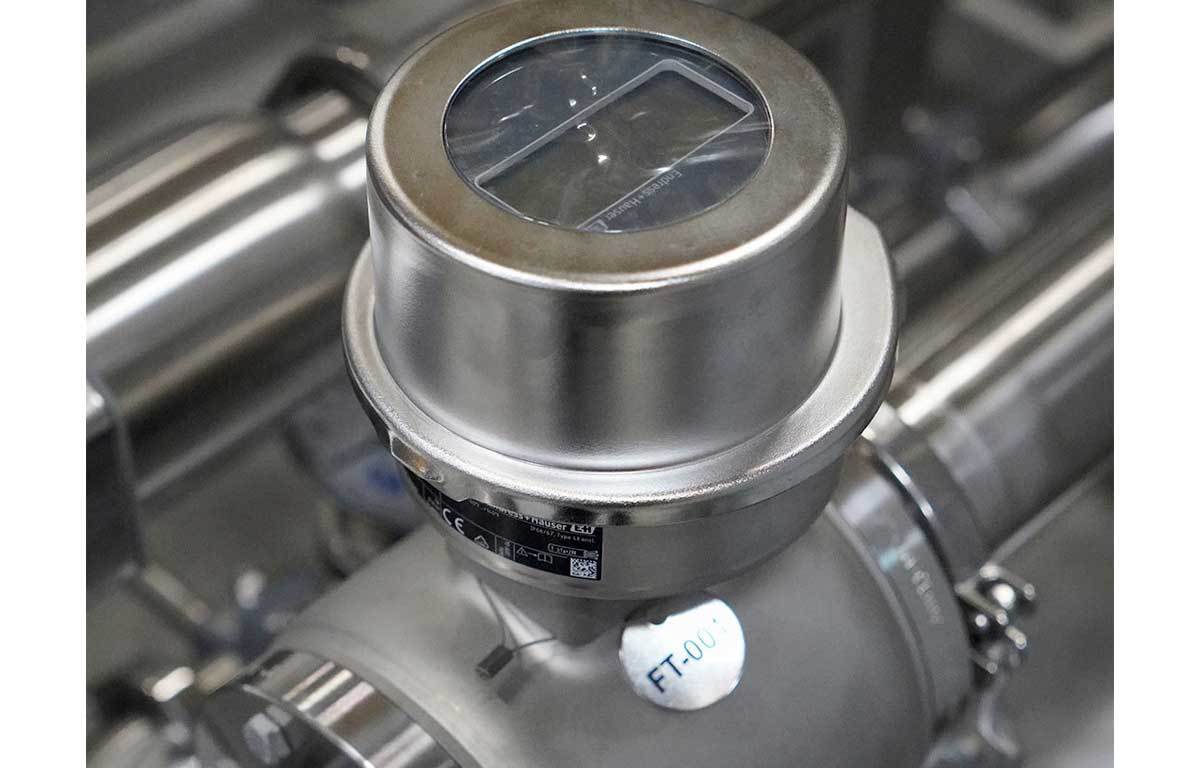
Ultrasonic flow meters have gained significant popularity in flow measurement due to their non-intrusive nature and high accuracy. These devices utilize ultrasonic waves to determine the velocity of a fluid within a pipe, making them ideal for a wide range of applications. In this blog post, we will explore 2 types of ultrasonic flow meters: Doppler and transit-time flow meters.
Let’s dive in and understand how each type works and their respective advantages.
- Doppler Flow Meters: Doppler flow meters operate on the principle of the Doppler effect, which is the change in frequency or wavelength of a wave as it reflects off a moving object. In the case of ultrasonic flow meters, sound waves are transmitted into the flowing fluid, and the Doppler effect is utilized to measure the velocity of the fluid.
How Doppler Flow Meters Work: A Doppler flow meter consists of two transducers placed on opposite sides of the pipe. One transducer emits ultrasonic waves at a specific frequency, while the other receives the reflected waves. When these waves encounter particles or bubbles within the fluid, their frequency is altered due to the Doppler Effect. The receiving transducer measures the frequency shift, allowing fluid velocity calculation.
Advantages of Doppler Flow Meters:
- Non-intrusive: Doppler flow meters do not require direct contact with the fluid, making them suitable for measuring corrosive or hazardous substances without contamination risks.
- Suitable for opaque fluids: Doppler flow meters can effectively measure fluids containing suspended solids or entrained gas bubbles, even when the fluid is not transparent.
- Cost-effective: Compared to transit-time flow meters, Doppler flow meters are often more affordable and simpler to install.
Limitations of Doppler Flow Meters:
- Limited accuracy at low flow rates: Doppler flow meters may need help measuring low flow rates since bubbles or particles are necessary for accurate readings.
- Dependent on fluid properties: The accuracy of Doppler flow meters can be influenced by fluid properties such as density, viscosity, and temperature, which may require additional calibration.
- Transit-Time Flow Meters: Transit-time flow meters utilize the principle of time-of-flight to measure the velocity of a fluid. This method involves measuring the time an ultrasonic signal takes to travel between two transducers, one upstream and one downstream.
How Transit-Time Flow Meters Work:
Transit-time flow meters consist of two pairs of transducers. One team acts as a transmitter, emitting ultrasonic waves in the same direction as the fluid flow. In contrast, the other pair acts as receivers—the transducers alternate roles in transmitting and receiving signals. The time difference between upstream and downstream travel is measured, and the fluid velocity can be calculated from this.
Advantages of Transit-Time Flow Meters:
- High accuracy: Transit-time flow meters offer high accuracy across a wide range of flow rates, making them suitable for various applications.
- Bi-directional measurement: Since transit-time flow meters measure the time taken for signals to travel in both directions, they can accurately measure bidirectional flows.
- Wide range of fluid compatibility: Transit-time flow meters can be used with various fluids, including clean liquids, gases, and mildly dirty liquids.
Limitations of Transit-Time Flow Meters:
- Susceptible to pipe material and installation effects: Transit-time flow meters require a well-defined acoustic coupling between the transducers and the pipe walls. Variations in pipe material, wall thickness, and installation techniques can impact accuracy.
- Presence of air bubbles: Transit-time flow meters may encounter challenges when air bubbles are present in the fluid, as they can cause signal attenuation and measurement errors.
In conclusion
Doppler and transit-time flow meters are widely used 2 types of ultrasonic flow meters that offer non-intrusive, accurate, and reliable flow measurement solutions. Doppler flow meters excel in applications where the fluid contains suspended solids or entrained gas bubbles, making them suitable for various industries. On the other hand, transit-time flow meters provide high accuracy across a wide flow rate range and are versatile in measuring various types of fluids.
 Geek Guy Tech